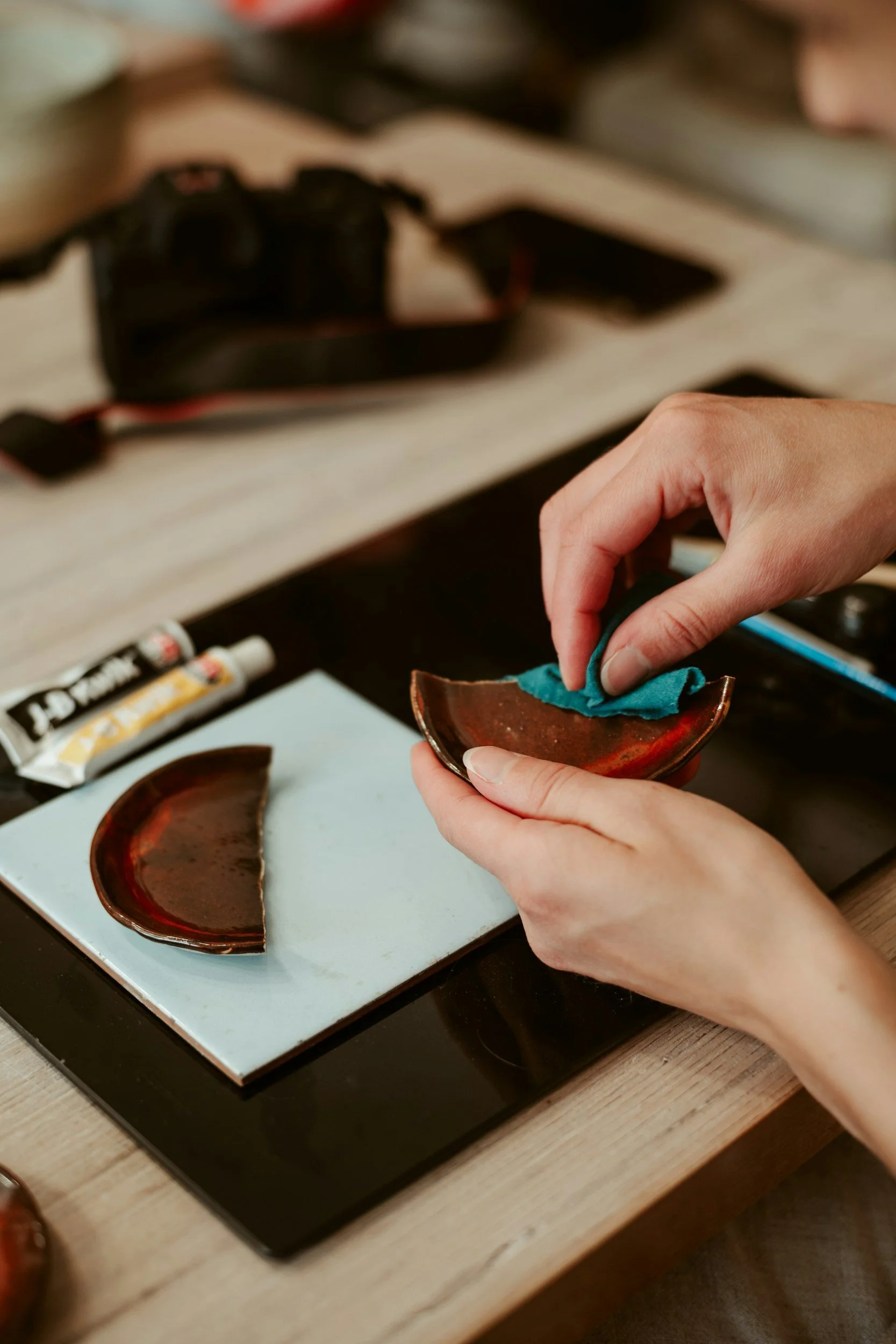
Kintsugi, learned by hand.
Small-group in-person experiences in the traditional Japanese craft of repairing broken objects with gold. Urushi lacquer, real materials, unhurried time. Trained in Tokyo.
Central Singapore.
TRAINED OVER 12 MONTHS IN EBISU, TOKYO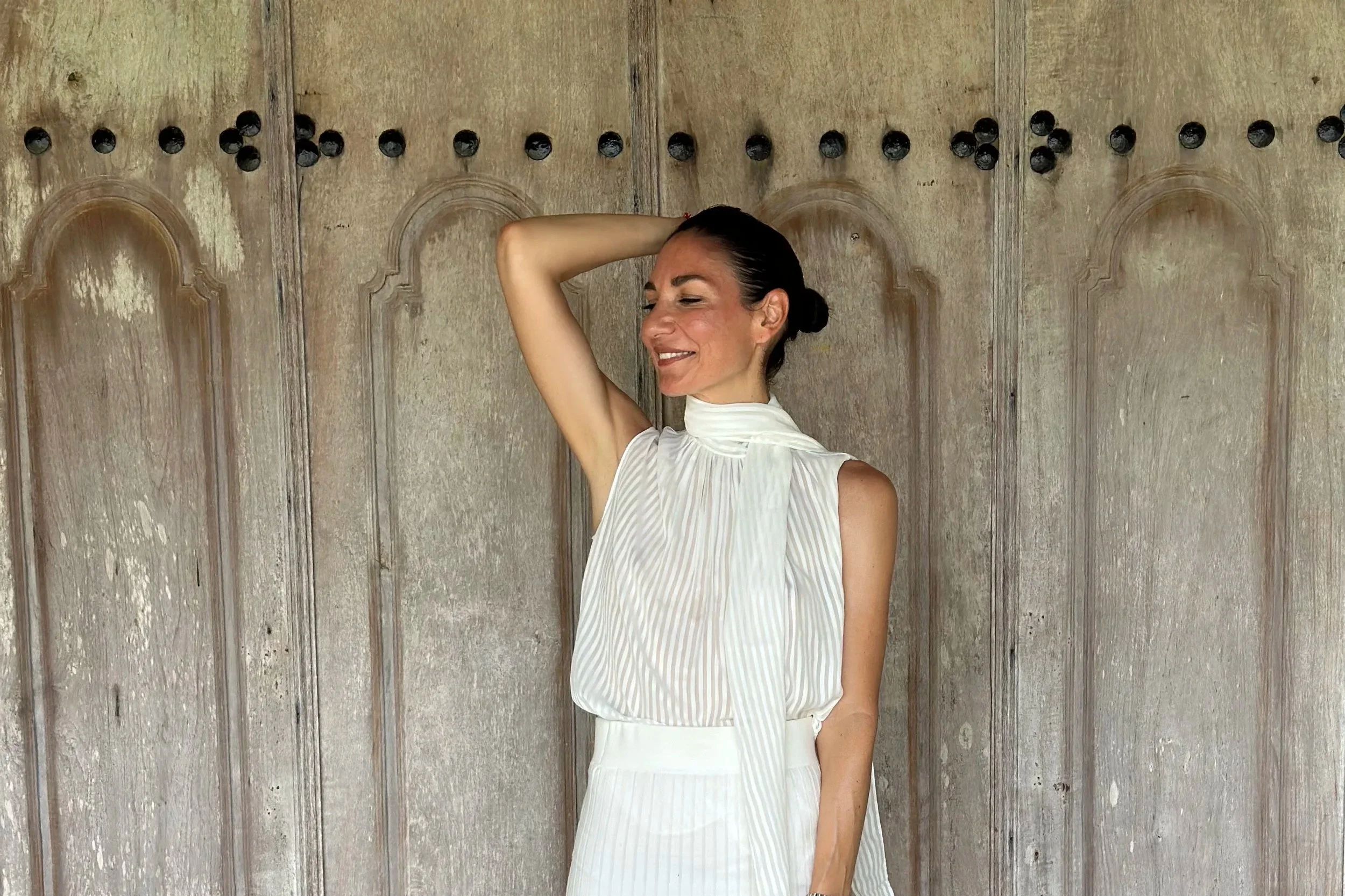
I bought a kintsugi kit on a family trip to Japan and left it in a cupboard for five years. When I finally wanted to learn, I signed up for a workshop here in Singapore.
Within twenty minutes I understood I was doing something else. Synthetic materials. A good deal of talk about healing.
It wasn't what I'd come for, so I went to Tokyo.
My teachers and I had no language in common.
They spoke no French and no English. I had very little Japanese. We worked with our hands, and somehow I knew what was being asked of me.
After months of this, one of my teachers looked at a repair I'd made and said:
いいです
ii desu: Nice.
That's the whole of it, and it took twelve months.
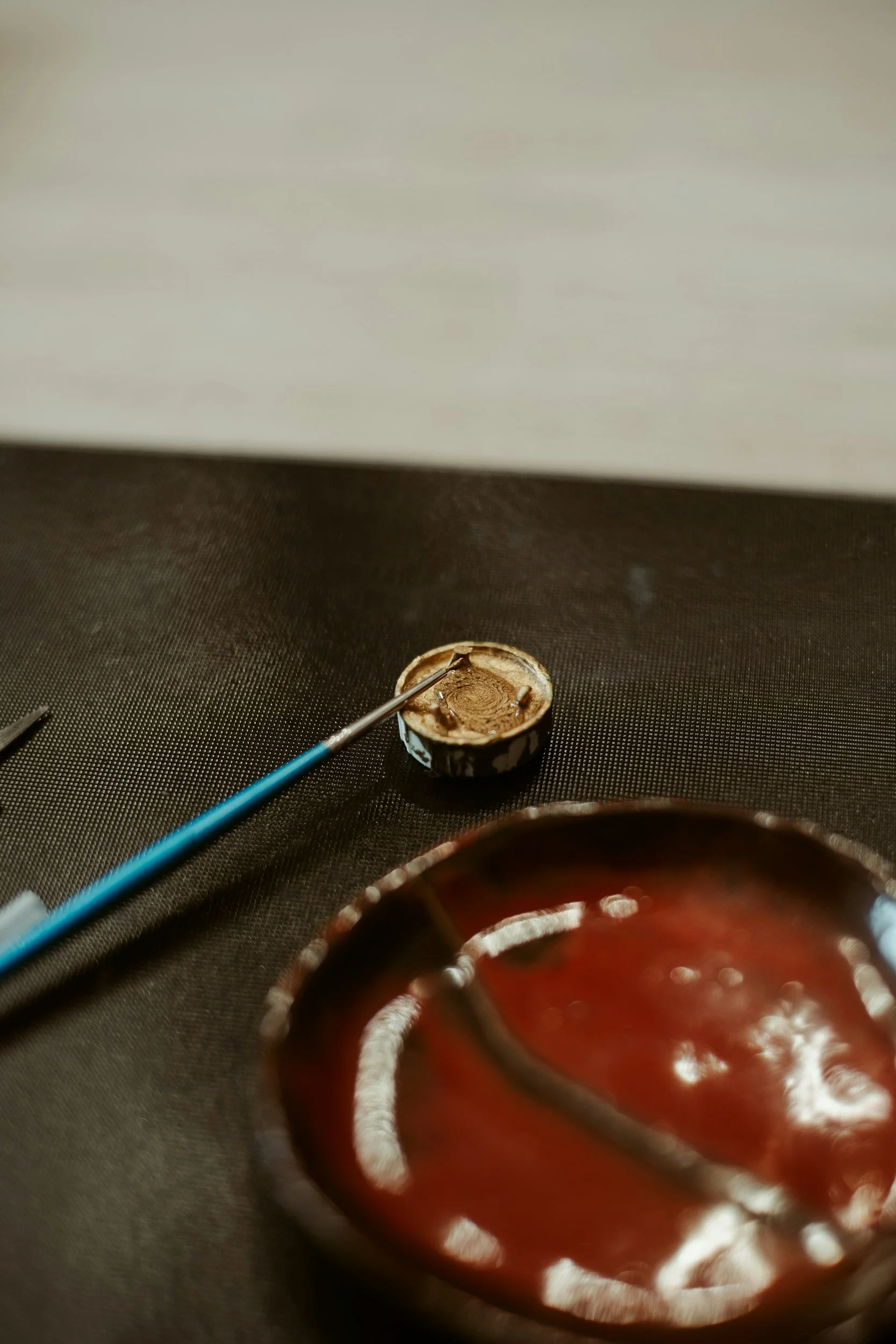
THE MATERIALUrushi cures. It doesn't dry.
It hardens by drawing moisture out of the air, in a humid box called a muro. Each pass needs a day or two in there before the next can go on. That's chemistry, not scheduling.
The smell is awful. Kneading it, mixing it with powders, making lacquer out of it — that part is a real pleasure, and I hadn't expected it to be.
There's a faster version worked in synthetic resin (epoxy) and brass powder, but such repairs can't safely go back to food or drink, and go against the patience of the traditional Japanese repair.
Raw urushi lacquer contains allergen that can cause rashes, you will be required to wear gloves to avoid skin contact.
OVER A TERMWhat happens to your vessel.
Although every piece argues with the plan somewhere, this is what you can expect.
-
And how. Then the broken edges are chamfered so they'll take the lacquer and hold.
-
Mugi-urushi — raw lacquer worked into wheat flour — and the piece goes into the muro to set.
-
Kokuso, a lacquer putty, where a chip runs deep or a fragment is missing. Not every piece needs it.
-
Sabi-urushi into the finer gaps, then sanded back until the line of the original form returns.
-
Black urushi, coat after coat, cured and polished between each one. This is the hardest part, and still the hardest part for me.
-
A final coat of urushi, gold laid on while it's still tacky, then burnished.
Three, four and five don't happen once. They repeat — thin pass, wait a day or two, thin pass again, as many times as the piece asks for. That repetition is where the months go.Where the gold goes
Gold is the most expensive thing in the room, and it isn't always the right answer. The term includes gold on one piece — a Tek Sing bowl, or whichever of yours means the most. You choose, and not on the first day.

Everything else is finished in black or red lacquer. A proper finish, not a consolation. Part of what you'll learn is telling the difference.
Gold on further pieces is priced by the repair, since it depends how much line there is to cover.
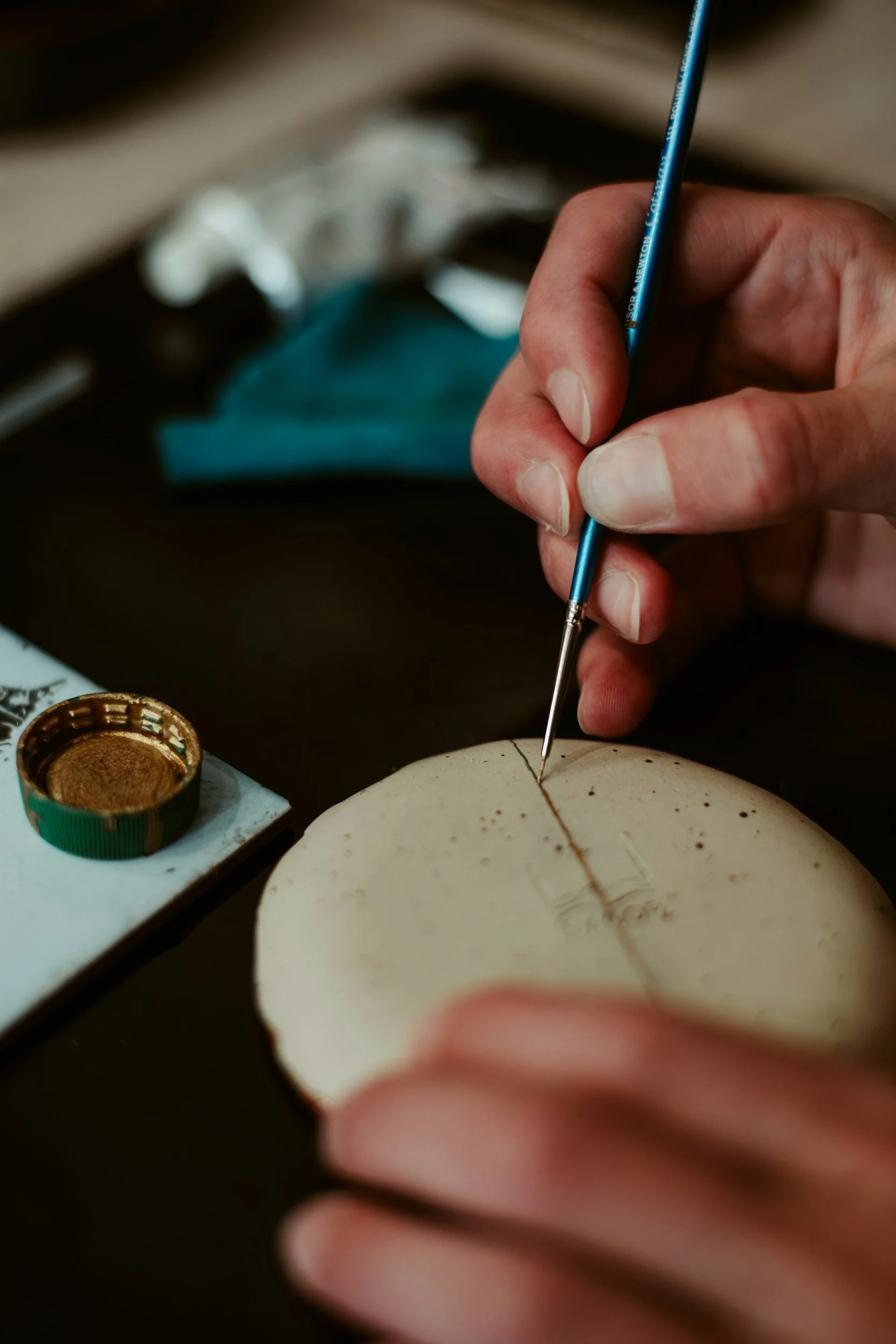
WHAT YOU’LL WORK ONBring two or three pieces, or none
Bring several rather than one. While a piece is curing you move to the next. Send me photographs beforehand and we can discuss what you're taking on.
If nothing of yours is broken
In February 1822 a junk called the Tek Sing went down in the South China Sea carrying tens of thousands of pieces of Chinese porcelain. The wreck was found in 1999. Nine of those bowls are in my studio, almost all of them chipped.
You're welcome to work on one $250
THE AUTUMN TERM4 slots a week, 90 minutes.
Tuesday
11.00–12.30
Wednesday
18.00–19.30
Thursday
9.30–11.00
Saturday
10.00–11.30
What it costs.
One session · $300
Come once before you decide. Credited in full against a pack if you go on.
Six sessions · $1,600 ($270 each)
Ten sessions · $2,500 ($250 each)
Further sessions · $270 each
A bowl from the Tek Sing · $250
Most simple breaks finish in six. Anything with missing fragments, or several pieces, takes ten or more — send me photographs first and I'll tell you which you need.
Sessions run to mid-December. PayNow or bank transfer.